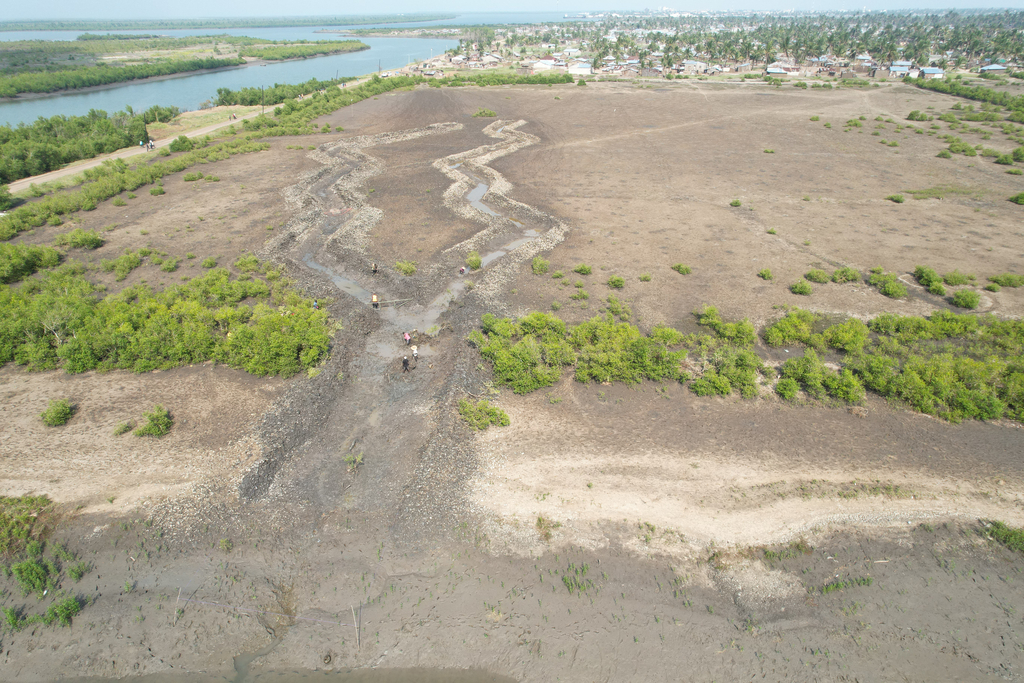
Mangrove recovery in Quelimane by hands‑on restoration: tidal channels were reopened, water exchange was restored, and natural regeneration conditions were re‑established.…
Mangrove restoration and creation
Ocean Health accelerates mangrove recovery by restoring natural water and sediment dynamics that allow ecosystems to rebuild themselves. By reopening tidal flows, enabling natural seedling growth, and partnering with local communities, we deliver large‑scale, low‑cost restoration that boosts biodiversity, strengthens fisheries, improves water quality, stores carbon, and protects coastlines.
Request info
Contact
Want to know more about Mangrove restoration and creation?
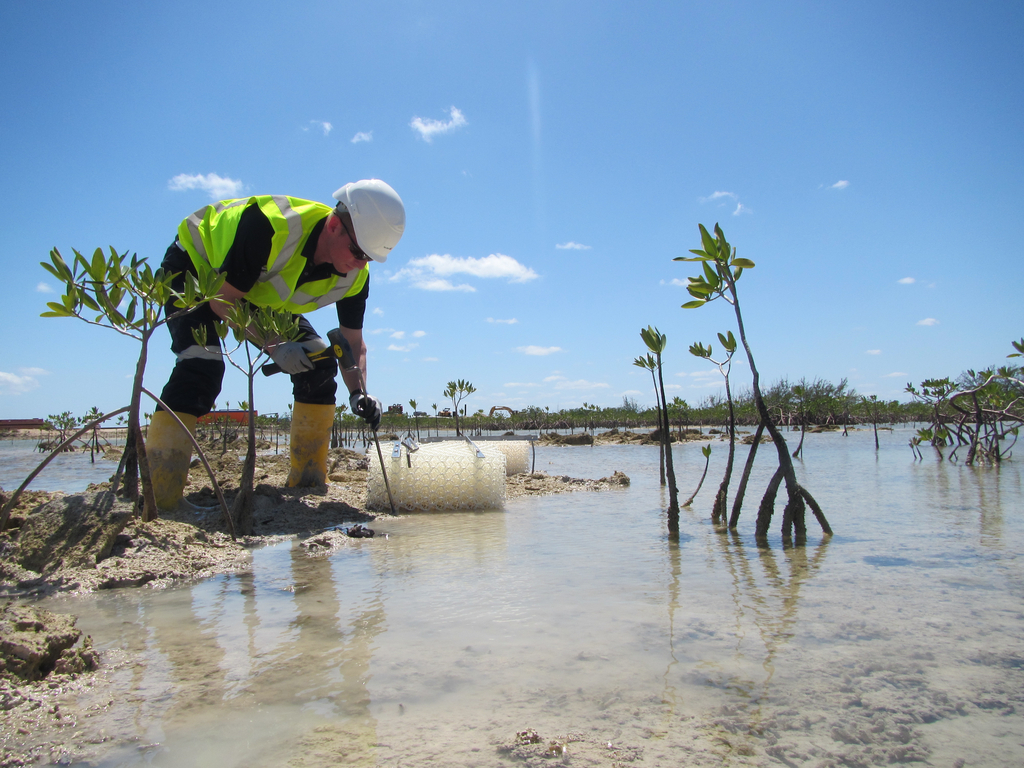
Mangroves are salt‑tolerant trees and shrubs that form dense coastal forests, stabilizing shorelines, reducing erosion, and protecting communities from storms and rising seas. Their roots support rich biodiversity, provide nursery habitat for fisheries, filter pollutants, and store up to four times more carbon than terrestrial forests. Despite their resilience, they face growing pressure from deforestation and development, making their protection and restoration essential for healthy coasts and livelihoods.
Our Approach
Ocean Health restores mangrove ecosystems by re-establishing natural hydrological, morphological, and ecological conditions which in turn deliver large scale, cost-effective recovery of ecosystems. Our strategy focuses on understanding how water, sediment, and vegetation interact, then removing barriers that prevent mangroves from regenerating naturally. By expanding mangrove coverage and restoring natural hydrology, projects enhance biodiversity and improve water quality through reduced nutrient loads.
Possible interventions include:
- Restoring tidal hydrology by improving natural water flow and reconnecting tidal channels.
- Enhancing natural regeneration by creating conditions where mangrove seedlings can successfully settle and establish.
- Manually planting seedlings only when natural recovery is not sufficient.
- Engaging communities in design, monitoring, planting, and long-term stewardship.
In our projects, we collaborate with local and international NGOs, government agencies and conservation authorities, research institutes, and local communities and cooperatives.
